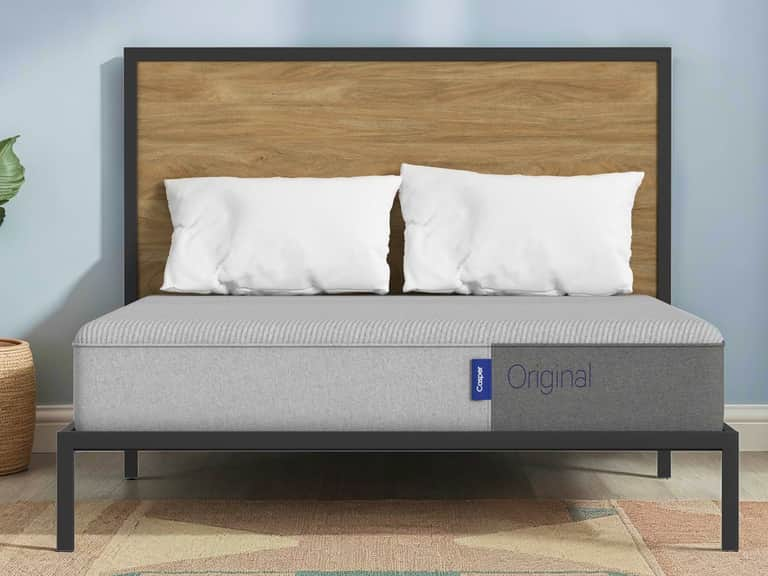
Original Mattress
Sleep cooler and comfy with breathable Casper Signature Foam, body-hugging memory foam, and 3-zone Zoned Support for ergonomic spinal alignment and steady, responsive comfort all night.
A Time-style exploration of material science, certifications, and the lived experience of sleep. In hosting guests, the right mattress is more than a purchase; it is a promise of comfort, durability, and quiet hospitality.
When you invite someone into your home, sleep becomes the quiet hinge upon which hospitality turns. The domain guestbed.com has long stood for practical guidance on setting up guest spaces. At the heart of any guest room is the mattress—a vessel for rest, a barometer of comfort, and a proxy for the host’s attention to detail. In this guide, we foreground two brands that consistently surface in conversations about organic, responsible sleep: Vispring and Naturepedic. Each company embodies a distinct philosophy about materials, certification, and the ethics of production. The question is not merely which is better, but which aligns with your guest room’s space, climate, and the expectations you hold for family, friends, or colleagues who sleep under your roof.
Organic mattresses promise a sleep experience free from harmful chemicals and synthetic coatings, with natural or responsibly sourced components. Yet the market remains a battleground of claims and certificates. To navigate it, we anchor our discussion in three pillars: materials and construction, certifications and third-party validation, and practical testing for guest-use scenarios. We’ll also integrate a concrete product example from the list of options we evaluated, highlighting how a high-quality mattress can translate into tangible guest-room value.
Vispring and Naturepedic approach sleep surfaces from different ends of the spectrum—Tradition and Transparency. Vispring is renowned for luxury hand-tufted mattresses crafted from natural materials. Its signature involves a layered build of natural latex, Horsham cotton, horsehair, and long-staple wool, all wrapped in a bespoke pocketed-coil system. The result is a mattress that breathes, adjusts gradually to movement, and offers a cradle-like support that many guests associate with hotel-grade comfort. The construction emphasizes a slow, responsive “hug” rather than a quick contour, which can be especially forgiving for guests who have varied sleep positions or sensitivities to firmness transitions. Naturepedic, by contrast, positions itself as a proponent of organic and non-toxic design, with a strong emphasis on certifications, plant-based or natural fills, and explicitly certified organic materials where applicable. Naturepedic often uses organic cotton, and, depending on the model, latex or encased coils that balance support with a more defined edge. The result can feel cradling but in a more evenly distributed, sleep-surface experience that appeals to sleepers seeking a cleaner, chemical-free environment. The material dialog is not a binary choice; it is a nuanced dialog about feel, temperature regulation, and lifecycle. For a guest room, consider how you want the room to “read” in terms of climate. If you host guests in a warm climate or a space with variable temperatures, the breathability of natural fibers and the moisture management of latex become central. If you prioritize a firm, stable feel with explicit organic credentials, you might lean toward Naturepedic’s offerings. Either way, a well-chosen organic mattress becomes a quiet ambassador for good sleep.
Certification serves as a language of trust in a market crowded with claims. For organic mattresses, several certification ecosystems repeatedly surface as reliable signals of safety, environmental responsibility, and product integrity. The most commonly cited certificates include GOTS (Global Organic Textile Standard) for textiles; MADE SAFE for chemical exposure; and CertiPUR-US for foam content, which, while not an organic certification, helps consumers understand the content and emissions of memory foams. In a guest room, where you want to minimize allergen exposure and maximize peace of mind for diverse visitors, certifications act as a practical shorthand for “safe and clean.” Vispring’s approach centers on traditional materials and craftsmanship, often with less emphasis on contemporary foam certifications, but their natural materials are naturally breathable and less likely to emit volatile organic compounds. Naturepedic, however, places a stronger emphasis on transparent material sourcing and a robust certification stack that can help hosts feel more confident about the product’s environmental and health standards. When you compare Vispring and Naturepedic, think not only about the surface comfort but also about what you’re validating with your guests: Are you confident in a long-term, low-emission sleep surface? Do you want to guarantee a product that can be updated or replaced with minimal environmental impact? These questions guide a responsible choice for a guest space.
Testing for a guest room should be practical, not perfunctory. The goal is to approximate the guest experience, appreciating that different sleepers—back, side, stomach—will interact with a mattress in varied ways. A few tested strategies include: - Sleep trials and return policies: A generous trial period is an honest signal of brand confidence. If your local retailer offers extended test periods, or if the vendor has a home trial program with a clear return policy, that is a meaningful asset for a guest-heavy household. - Local context: Consider temperature regulation in your space. A warmer room may benefit from breathable natural materials; a cooler or dry environment may welcome a more structured, zoned support system. - Movement and edge support: For guest rooms that double as multipurpose spaces, edge support matters for couples or tall guests who may sit on the edge during the day or sleep near the periphery at night. - Durability and lifecycle: Organic materials often age gracefully, but their durability varies with use. A guest room mattress may experience fewer nightly uses per year than a primary bed, but guests may still bring different distribution patterns over time. To illustrate, we examine a representative model from the product list: the Original Mattress from Casper, a contemporary foam bed that represents a distinct approach to comfort, airflow, and zoning. Although not organic by certification alone, it provides a useful contrast when considering how different families evaluate sleep comfort in a guest room. The Original Mattress leverages Casper Signature Foam to promote airflow and cooling, alongside a three-zone Zoned Support system for spinal alignment. It demonstrates how a modern foam architecture can deliver predictable, responsive support, and its inclusion serves as a counterpoint to organic-influenced designs.
Guiding principles for selecting an organic mattress for guest spaces hinge on a balance between comfort, safety, and practicality, including room size, guest expectations, and maintenance. The following scenarios illustrate how to align your choice with your guest-hosting goals: - Small guest rooms: In compact spaces, a well-chosen single- or small double with a good fit and breathable cover is crucial. A mattress with moisture-wicking, natural fabrics can help manage humidity and temperature without requiring heavy airflow devices. - Seasonal hosting: If your house experiences seasonal spikes in hosting, you’ll appreciate a mattress that can adapt to varying temperatures and sleeping positions without requiring frequent flipping or rotation. The right organic option can offer stable support with less maintenance. - Family or long-term visitors: When hosting extended guests, durability and long-term comfort garner more importance. An organic mattress that aging gracefully and maintains core support is valuable in such contexts. - Allergy-conscious hosting: For guests with sensitivities, hypoallergenic materials and robust certifications may be the deciding factor. Naturepedic’s emphasis on organic materials can provide reassurance in this regard, while Vispring’s natural materials can minimize exposure to harsh synthetic components. For readers purchasing with a future guest’s comfort in mind, the time-tested approach remains: prioritize material transparency, prioritize a robust trial period, and ensure your space’s climate supports the chosen surface.
Ultimately, both Vispring and Naturepedic offer compelling paths toward safer, more comfortable sleep environments for guests. The ultimate choice depends on your hosting priorities: If you prize traditional luxury, craftsmanship, and a sleeping surface that breathes and adapts to the body over time, Vispring is a worthy focus. If you seek a product with explicit organic credentials, transparent materials sourcing, and a certification-forward approach, Naturepedic is a robust option. For a guest room that embodies the best of both worlds, you can juxtapose these philosophies by selecting a high-quality organic mattress with a breathable, temperature-regulating cover, and pairing it with a well-planned room setup that emphasizes light, airflow, and soothing aesthetics. In the broader frame of guestbed.com’s philosophy, the mattress is not merely a product but a promise: a nightly assurance that your guests will rest well enough to awaken ready to enjoy your hospitality, a signal of a home that values comfort, health, and a quiet, considerate approach to hosting.
Throughout history, thinkers and designers have guided how we think about sleep, comfort, and craftsmanship. Here are three influential figures from different periods whose work resonates with the topic of organic sleep surfaces:
Note: This article aligns with the Direction A recommendation for a guest-host-focused site. It emphasizes actionable, evidence-based guidance on guest bedding, with a concrete product reference to the Original Mattress for readers seeking a practical comparison point within the broader context of organic and non-organic sleep innovations.